In almost every case, no, you don't need to buy your own insurance to rent a bounce house for a backyard birthday. Florida law puts that responsibility on the rental company, not the parent: an amusement-ride operator here has to carry at least $1 million per occurrence in liability coverage. Your real job is to confirm the company actually carries it, read the waiver you'll sign so you know what you're agreeing to, and keep an adult watching the inflatable. Do those three things and you're covered the way the law intends.
I get this question on the phone almost every week, usually from a parent booking their first inflatable who read something scary online. It's a smart thing to ask. A bounce house is fun, but it's also a big piece of equipment with kids flying around inside it, and somebody is on the hook if things go wrong. Here's exactly who that somebody is, what Florida requires, and the short list of things I'd check before handing anyone a deposit, mine included.
On this page
- Do you need your own insurance to rent a bounce house?
- Who is responsible if a child gets hurt?
- Does Florida law require bounce house companies to be insured?
- What insurance covers, and what it doesn't
- Will my homeowners insurance cover a bounce house accident?
- What's in the rental waiver you'll sign?
- 5 questions to ask before you book
- Frequently asked questions
Do you need your own insurance to rent a bounce house?
No, not as the parent or host renting it for a private party. The insurance that matters belongs to the rental company. Think of it like a taxi: you don't buy commercial auto coverage to take a cab, because the driver's company carries it. A legitimate inflatable operator is required to insure the equipment and its use, so a one-afternoon backyard rental doesn't call for you to go buy a policy of your own.
Where parents get tripped up is assuming their homeowners policy quietly has them covered, when it often doesn't. More on that below. The headline is that the protection you want is already supposed to be sitting with the company that drops off the unit. You just have to make sure it's real.
Who is actually responsible if a child gets hurt?
Responsibility is split, and it's worth understanding the split before you book rather than after. Here's how it actually breaks down at a normal backyard party:
- The rental company is responsible for delivering a safe, clean unit, anchoring it correctly, and carrying the liability insurance the state requires. If a child is hurt because of a defect, a bad setup, or faulty equipment, that's squarely the operator's lane, and their policy.
- You, the host, take on the responsibilities spelled out in the rental agreement you sign, chiefly supervising the inflatable and enforcing the posted rules (age, capacity, no shoes, no flips, no piling little ones in with big kids).
That division is the single most important thing most parents miss. A company's policy is built to respond when the company did something wrong. It is not a blanket that pays out no matter what, and the fastest way to void the protection you're counting on is to leave the bounce house unsupervised while the adults drift over to the food table.
Does Florida law require bounce house companies to be insured?
Yes. Florida treats inflatables as amusement rides, and the law is specific about coverage. Under Florida Statute 616.242, an owner or manager "may not operate an amusement ride" unless they have, at all times of operation, a liability policy of at least $1 million per occurrence and $1 million in the aggregate for injuries arising out of the ride's use. A separate law, the Amusement Ride and Attraction Insurance Act (Statute 546.003), says the same thing in plainer words: no one may operate an amusement ride or attraction without a policy "of not less than $1 million per occurrence."
That figure isn't a company bragging number. It's the floor the state sets, enforced through the Florida Department of Agriculture and Consumer Services, which runs the fair-rides inspection program. So when a bounce house company tells you it's "fully insured," there's a real, checkable standard behind the phrase. A company that can't or won't show you proof it meets the standard is telling you something important about how it operates.
It also matters because of where kids' parties happen. Plenty of Central Florida venues, including public parks, schools, churches, and a lot of HOAs, won't let an inflatable on the property at all unless the rental company hands over a certificate of insurance first, often naming the venue as an additional insured. If you're planning a party anywhere but your own yard, that certificate isn't just nice to have; it's your permission slip to set up.
What a rental company's insurance covers, and what it doesn't
A commercial liability policy is broad, but it is not infinite, and the exclusions are where surprises live. Here's the honest picture of a typical operator's coverage:
| Usually covered | Usually NOT covered |
|---|---|
| Injury caused by a defective or failing unit | Injuries from ignoring the posted rules |
| An accident caused by improper setup or anchoring | Damage or injury during unsupervised play |
| Accidental property damage during delivery and setup | Overloading past the weight or capacity limit |
| A third-party injury claim tied to the equipment | Horseplay the waiver warns against (flips, pile-ons) |
| Weather-related equipment failure | Anything that happens after the rental period ends |
Read the right-hand column twice. Almost everything in it is within your control as the host, and almost all of it comes back to two things: supervision and following the posted limits. That's not fine print designed to trap you. It's the reality that the company can't stand in your backyard all afternoon, so the agreement asks you to be the adult in the room.
Will my homeowners insurance cover a bounce house accident?
Usually not reliably, so don't lean on it. Some homeowners policies include personal liability that could respond if a guest is hurt on your property, but coverage for a rented amusement device is inconsistent, often limited, and sometimes excluded outright. If a bounce house is central to your plan, the smart move isn't to hope your home policy stretches to cover it, it's to rent from a properly insured operator so the right coverage is already in place. If you want to be thorough, a quick call to your own insurance agent before the party never hurts; just don't treat your homeowners policy as the primary safety net.
What's in the rental waiver you'll sign?
Every reputable company will have you sign a short rental agreement, and it's worth the two minutes to actually read it. In plain terms, you're typically agreeing to:
- Supervise the inflatable with a responsible adult the entire time it's inflated.
- Follow the posted age, weight, and capacity limits, with no mixing toddlers and big kids and no overloading.
- Keep it anchored and set up as delivered. Don't move it, and don't rig a tarp or canopy over it in wind.
- Take responsibility for damage caused by misuse. Normal wear is on the company; a tear from someone sneaking in shoes or a pocketknife is on you.
None of that is unusual, and signing it doesn't mean you've taken on every possible risk. It means the company has told you, in writing, how to keep the day safe. The parents who have smooth parties are the ones who treat the waiver as the instruction sheet it is.

5 questions to ask before you book
You don't need to be an insurance expert. Ask these five and listen to how confidently they're answered.
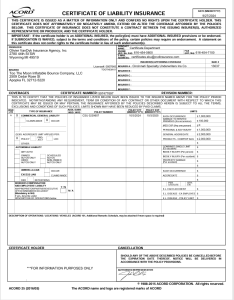
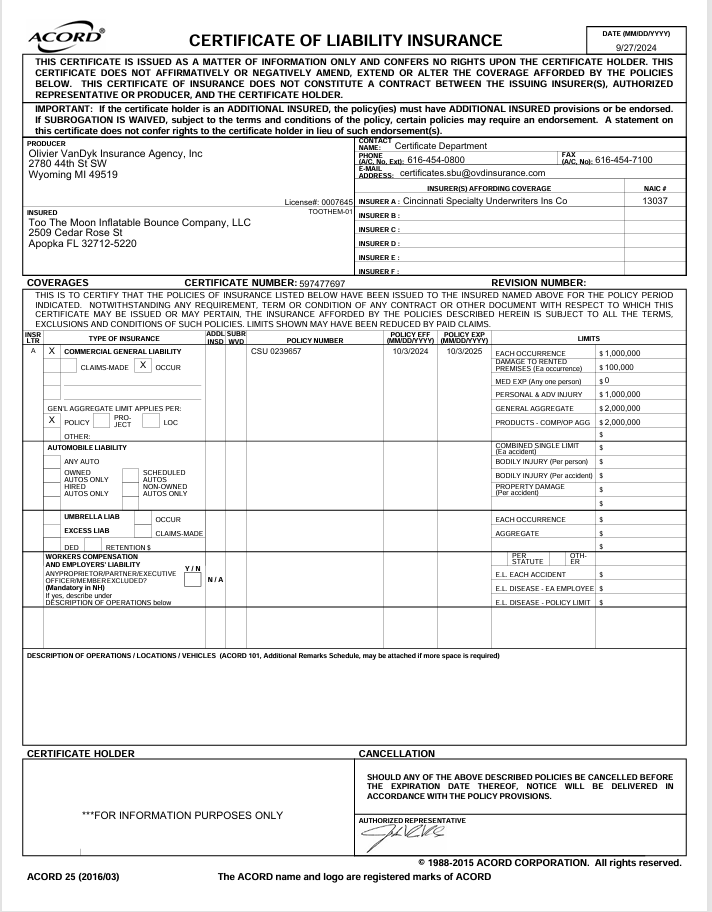
- "Can you send me your certificate of insurance?" A real operator shares it without hesitation. Check that it shows $1 million per occurrence and is active on your event date.
- "Are you a Florida-registered operator, and do you inspect and anchor every unit?" You want a yes, and an explanation of how they anchor on your surface.
- "What does the rental agreement make me responsible for?" If they can explain the supervision and limits in a sentence, they've thought about safety.
- "Do you set up on my surface, and how do you anchor it?" Stakes on grass, heavy sandbags on concrete or indoors. A shrug here is a red flag.
- "What's your wind, weather, and cancellation policy?" Florida afternoons turn on a dime; you want a clear plan, not a "we'll see."
How we handle insurance at Too The Moon
Since I'm telling you to vet every company, here's where we stand so you can hold us to the same bar. Too The Moon Bounce Co is family-owned, my wife Griselda and I run it ourselves, and we carry full liability insurance that meets Florida's requirement. If you ask for our certificate of insurance, we'll send it. If your park, school, church, or HOA in Apopka or anywhere around Orlando needs us named as an additional insured, we handle that too, and we do it for those venues all the time. We deliver, anchor, and inspect every bounce house and water slide ourselves, set up properly on grass, turf, concrete, or indoors, and walk you through the rules at drop-off so there's no guessing. Being insured and being careful is the whole job, not a marketing line. It's why 199 Central Florida families have left us five-star reviews.
One honest note: this article is general information for Florida renters, not legal or insurance advice for your specific situation. If you have an unusual venue or a question about your own policy, ask your agent, and ask us anything about ours.
Frequently asked questions
Do I need insurance to rent a bounce house for my kid's party?
In nearly all cases, no. For a private backyard rental, the rental company carries the required liability insurance, so you don't need to buy a policy of your own. Your job is to confirm the company is insured, sign and follow the rental agreement, and supervise the inflatable.
Does my homeowners insurance cover a bounce house accident?
Not reliably. Some policies include personal liability that might respond, but coverage for a rented amusement device is often limited or excluded. The dependable move is to rent from a properly insured company rather than lean on your home policy; call your agent if you want to be sure.
How do I know if a bounce house company is insured?
Ask for their certificate of insurance before you book. It should show at least $1 million per occurrence in liability coverage and be active on your event date. A legitimate operator will send it without pushback, and hesitation is a red flag.
How much insurance should a bounce house company have in Florida?
At least $1 million per occurrence and $1 million in the aggregate. That's the minimum Florida sets for amusement-ride operators under Statutes 616.242 and 546.003, and reputable inflatable companies carry it.
Who is liable if someone gets hurt on a rented bounce house?
It depends on what went wrong. If the injury came from a defect or a bad setup, that's the company's responsibility and its insurance. If it came from unsupervised play or breaking the posted rules, the rental agreement generally shifts that responsibility to the host who signed it.
Do I have to sign a waiver to rent a bounce house?
Yes, with any reputable company. The waiver spells out your responsibilities: supervision, age and capacity limits, and keeping the unit set up as delivered. Read it; it's really an instruction sheet for a safe party, not a trap.
Book with a fully insured Central Florida company
Clean, inspected, properly anchored inflatables across Apopka, Orlando and the surrounding suburbs, plus a certificate of insurance in your inbox whenever you need one.
Sources: Florida Statutes 616.242 (Safety standards for amusement rides); Florida Statutes 546.003 (Amusement Ride and Attraction Insurance Act); U.S. Consumer Product Safety Commission, Inflatable Amusements Deaths and Injuries report (113,272 ER-treated injuries, 2003–2013); U.S. CPSC bounce house safety guidance.